
Loomly offers a robust API for social media management, but its feature set, pricing structure, or specific integration capabilities may not align with every development project or marketing workflow. For developers building custom social media applications, agencies needing scalable client management solutions, or businesses seeking deeper automation, finding the right Loomly API alternative is crucial for operational efficiency and feature innovation. This guide provides a comprehensive, technical-first look at the top alternatives available, moving beyond surface-level marketing claims to focus on what matters most: API documentation, endpoint availability, SDKs, rate limits, and real-world implementation scenarios.
This resource is designed to help you make an informed decision by directly comparing the technical specifications and strategic advantages of each platform. We will analyze the APIs of tools like Late, Sprout Social, Hootsuite, and others, offering a clear-eyed assessment of their strengths and limitations. Whether you're a developer building a custom scheduling tool, a social media manager using no-code platforms like Zapier, or an agency managing multi-channel campaigns, this list will help you identify the API that best fits your technical requirements and business goals.
To understand the broader landscape of options beyond Loomly, it's beneficial to explore various top social media automation tools. In this article, however, we'll dive deeper into the API-specific functionality. Each entry includes detailed analysis, direct links to developer documentation, and insights to help you evaluate which solution offers the most powerful and flexible foundation for your social media operations.
1. Late
Late emerges as a formidable Loomly API alternative by offering a single, developer-first API to manage content across 11 major social platforms. It consolidates scheduling, posting, and analytics for Twitter/X, Instagram, TikTok, LinkedIn, Facebook, and more into one unified system. This approach is engineered to eliminate the significant development overhead of building and maintaining dozens of separate, complex platform integrations.
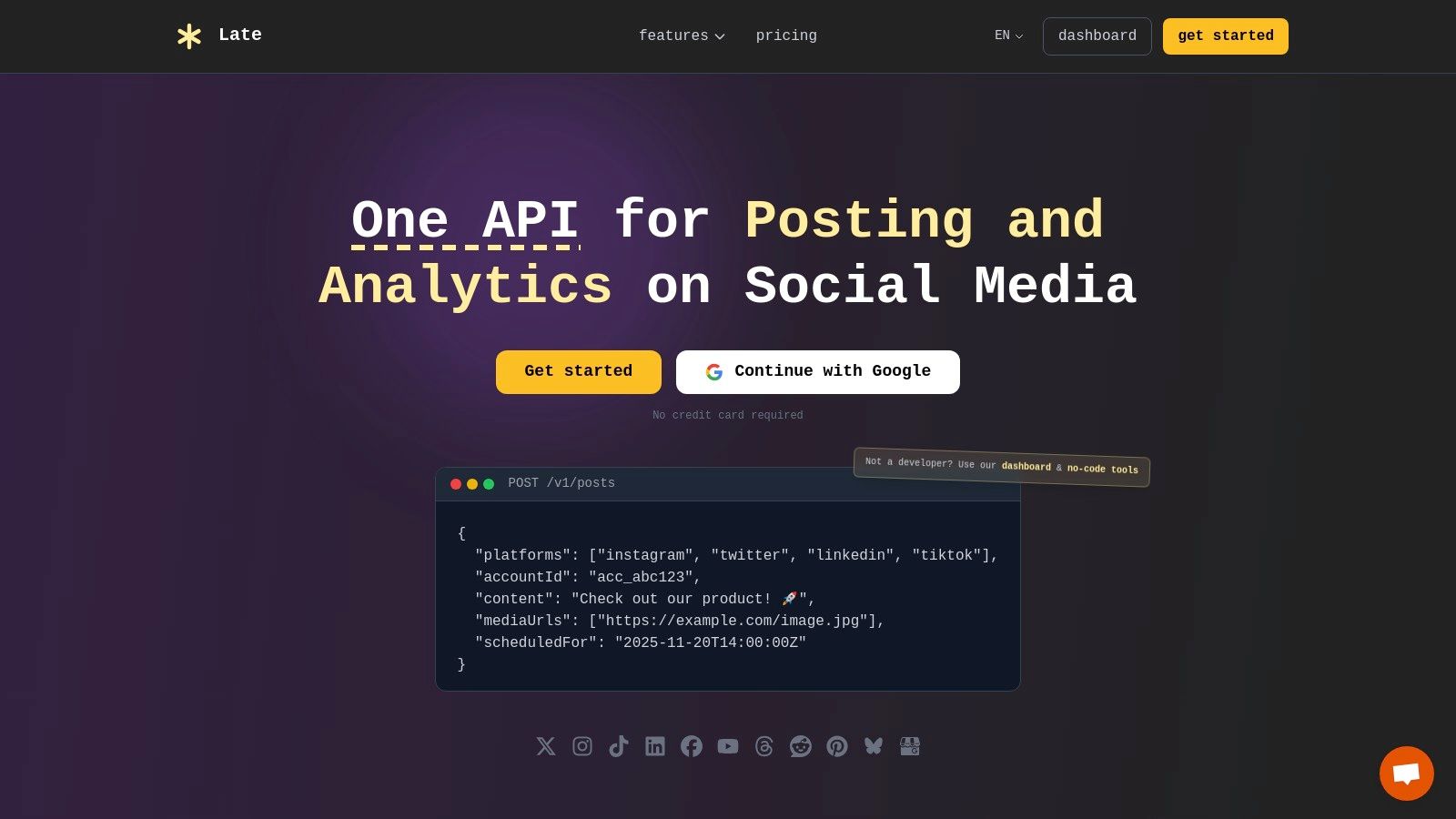
For engineers and agencies alike, Late provides REST endpoints, a dashboard for manual uploads, and native no-code connectors for Zapier, n8n, and Make. This flexibility allows teams to automate social media posting in minutes, bypassing the typical friction of platform-specific developer app approvals and quota management.
Key Strengths & Use Cases
Late's architecture is built for reliability and scale, boasting 99.97% uptime and sub-50ms response times. Its standout feature is the ability to post to multiple networks through a single endpoint, with automatic content transformations handling per-platform rules like character limits and media sizing. This is ideal for SaaS platforms embedding social scheduling features or agencies managing hundreds of client accounts from a central hub.
- Developer-First Functionality: Rich API with features like first-comment scheduling, bulk CSV uploads, and AI-powered video clipping.
- No-Code Accessibility: Native integrations empower marketing teams and no-code builders to create powerful automation workflows without writing code.
- Unified Analytics: Provides a consolidated view of key performance metrics with hourly data refreshes, crucial for timely campaign adjustments.
- White-Label Friendly: Branding remains invisible, making it a perfect backend for custom social media management tools. Learn how to automate your social media posting with this powerful API.
Pricing and Onboarding
Late offers a tiered pricing model that supports growth. All plans, including the Free tier, grant access to the full feature set, with limits scaling based on post volume and user seats. The free plan provides starter allowances (e.g., 10 posts/month), making it accessible for initial testing and small projects, while the Build, Accelerate, and Unlimited tiers accommodate growing teams and high-volume agencies.
Website: https://getlate.dev
| Feature Comparison | Late | Typical Alternative |
|---|---|---|
| API Integration | Unified API for 11 platforms | Separate integrations per platform |
| Uptime | 99.97% with sub-50ms response | Varies by provider; often less transparent |
| No-Code Support | Native Zapier, n8n, Make connectors | Limited or requires custom webhook setup |
| White-Label | Yes, fully invisible to end-users | Often includes provider branding |
| Platform Approvals | Not required; handled by Late | Requires individual developer app setup & approval |
| Free Tier | Yes, includes API access with a starter allowance | May be limited to a trial period or lack API access |
- Pros: Truly unified API saves months of integration work; high reliability and proven performance; robust feature set including content transformations and unified analytics; white-label ready and scalable pricing.
- Cons: Free plan has a limited post allowance, requiring an upgrade for significant usage; reliance on a third-party API means a potential delay for newly-released, niche native platform features.
2. Sprout Social
Sprout Social positions itself as an enterprise-grade social media management suite, and its API reflects this focus on data, analytics, and structured workflows. For developers and agencies looking for a Loomly API alternative with robust data extraction capabilities, Sprout Social is a formidable contender. The platform's Public API is primarily designed for accessing owned analytics, listening data, and integrating with internal business intelligence (BI) systems.
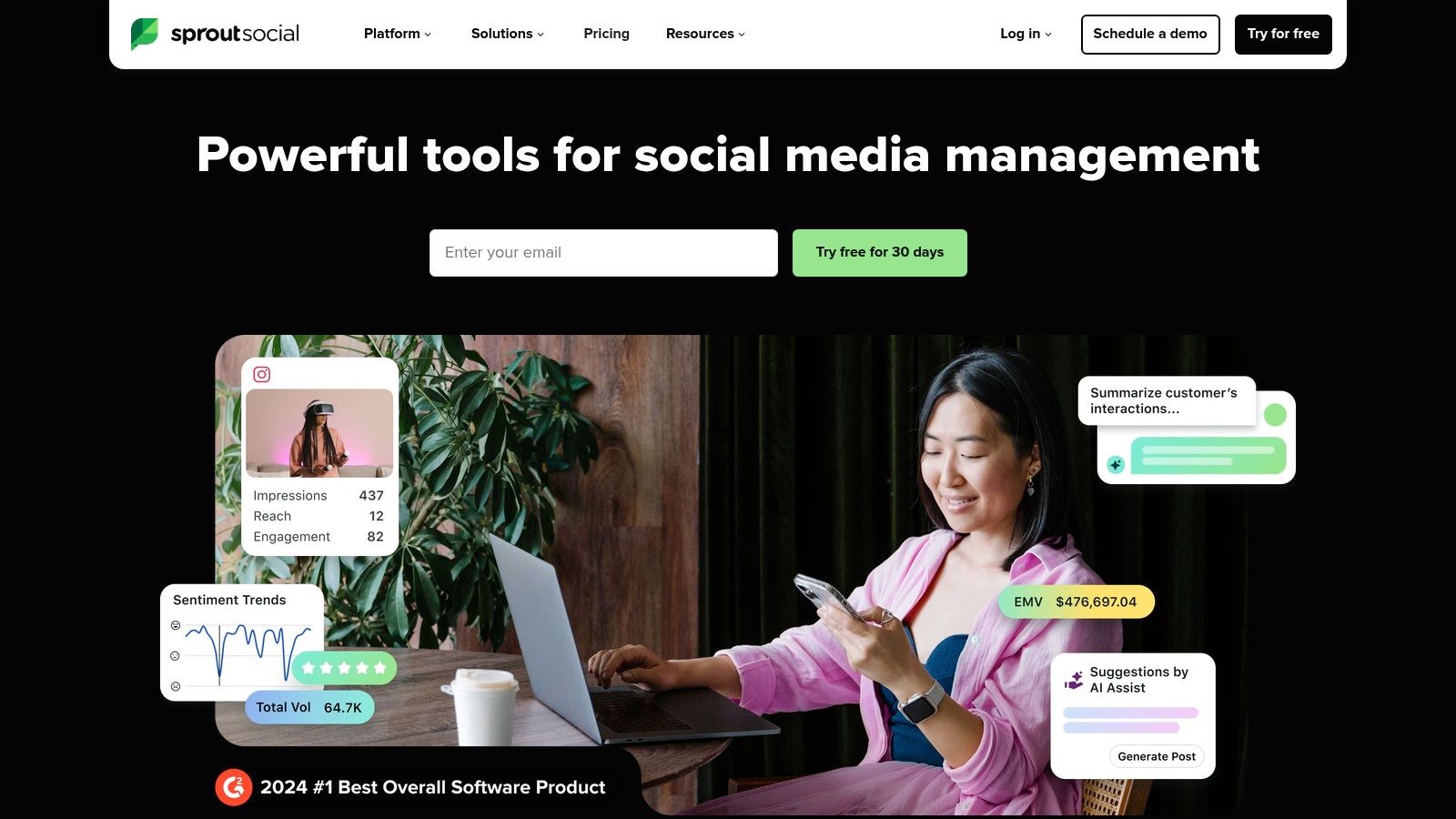
Unlike platforms with wide-open publishing APIs, Sprout Social’s approach is more controlled. Access to publishing and draft creation endpoints requires approval, making it suitable for building custom internal tools that feed into Sprout’s established approval and scheduling system, rather than for building a completely separate publishing interface.
Key API & Platform Features
- Authentication: Supports both OAuth 2.0 for user-level permissions and account-scoped tokens for server-to-server integrations. Token management is handled clearly within the platform's UI.
- Primary Use Case: Ideal for programmatic data export. You can build custom dashboards in tools like Tableau or Power BI by pulling granular analytics data that might not be available through the native interface.
- Access Requirements: API access is not available on all plans. It typically requires their Professional plan or higher and may involve an approval process, so it's not a fully self-serve developer experience from the start.
Limitations and Considerations
While powerful for analytics, the Sprout Social API has clear limitations. Data related to ads, competitor analysis, and certain third-party integrations is excluded from API access. The gated nature of its publishing endpoints means it’s less flexible for developers wanting to build a standalone social media scheduler from scratch. It is best leveraged as an extension of the core Sprout Social platform for large teams already invested in its ecosystem.
- Website: https://sproutsocial.com
3. Brandwatch Social Media Management (formerly Falcon)
Brandwatch offers an enterprise-grade social media management platform, and its suite of APIs reflects a commitment to comprehensive, end-to-end programmatic control. For large organizations or agencies seeking a Loomly API alternative that covers the entire social media lifecycle from publishing to analytics, Brandwatch is a powerful option. The platform provides a broad portfolio of APIs, including dedicated endpoints for Publish, Engage, and Measure, allowing for deep integration with existing enterprise systems.
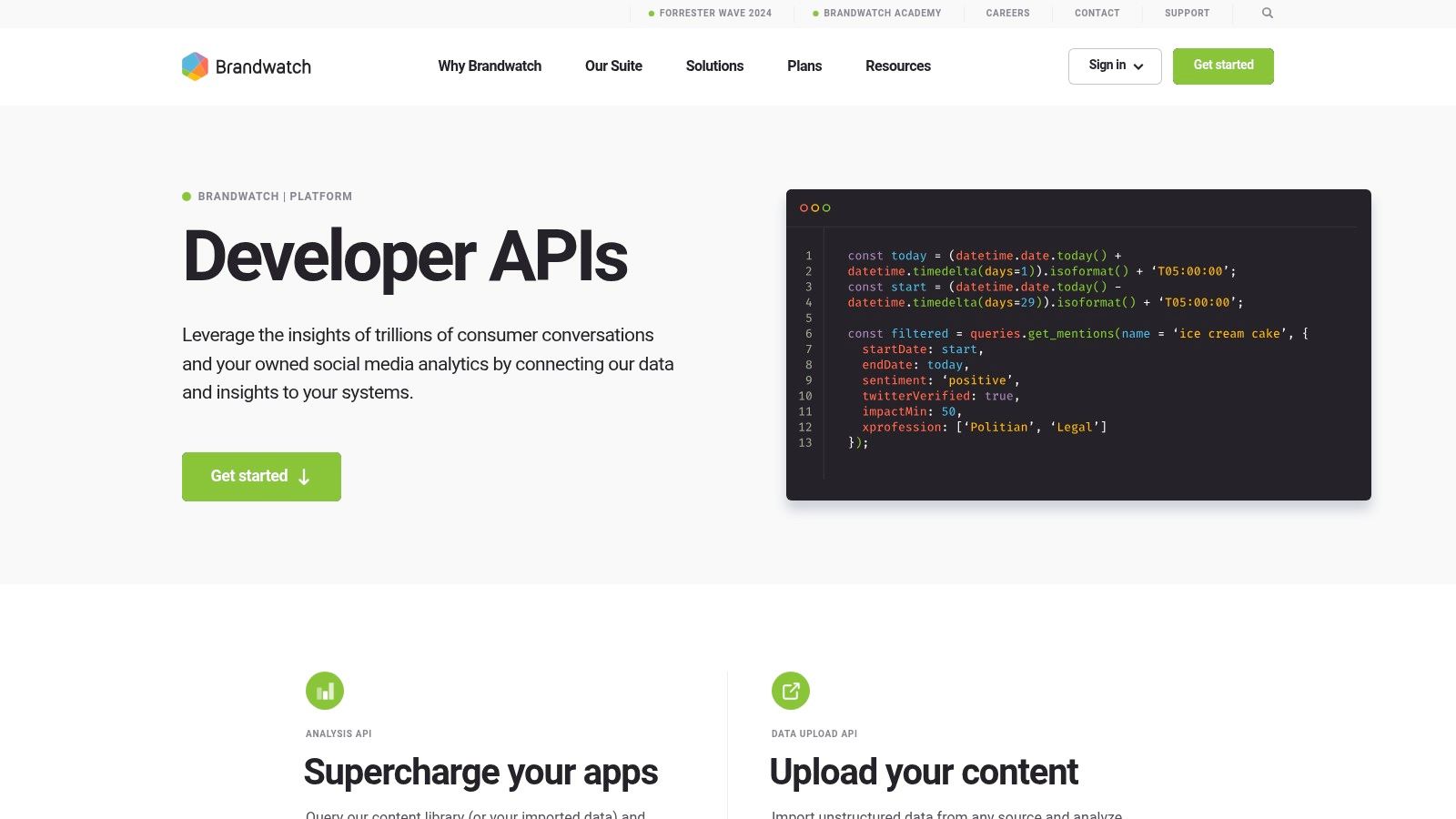
This approach is designed for mature teams that require programmatic governance and data consolidation. Rather than just offering a simple scheduling endpoint, Brandwatch enables developers to build sophisticated workflows that mirror the platform's own capabilities, including content creation, community engagement, and performance measurement, all backed by extensive technical documentation.
Key API & Platform Features
- Authentication: Utilizes API keys managed directly within the platform's administration panel, providing clear control over access and permissions for different applications or services.
- Primary Use Case: Best suited for building custom, integrated social media ecosystems. For example, you can programmatically push content from a digital asset management (DAM) system into Brandwatch's content pool or pull engagement data into a centralized customer support dashboard.
- Access Requirements: API access is not self-serve. It is typically included with enterprise-level contracts and requires signing specific terms, followed by an account setup and onboarding process.
Limitations and Considerations
The primary limitation of the Brandwatch API is its accessibility. It is not designed for small teams or individual developers looking for immediate, pay-as-you-go access. The platform is enterprise-priced, and gaining API credentials is part of a larger contractual agreement. This makes it less suitable for rapid prototyping or building a standalone application from scratch without a significant upfront investment in the Brandwatch ecosystem. It is best leveraged by large companies that need a scalable, supported, and secure API integration.
4. Khoros
Khoros targets the enterprise market with a comprehensive suite for social marketing, customer care, and community management. Its API ecosystem is a strong Loomly API alternative for large organizations requiring deep integration, governance, and CRM-style functionality. The Khoros Conversations API provides extensive control over the entire content lifecycle, from planning and authoring to publishing and reporting, making it suitable for complex, multi-brand operations.
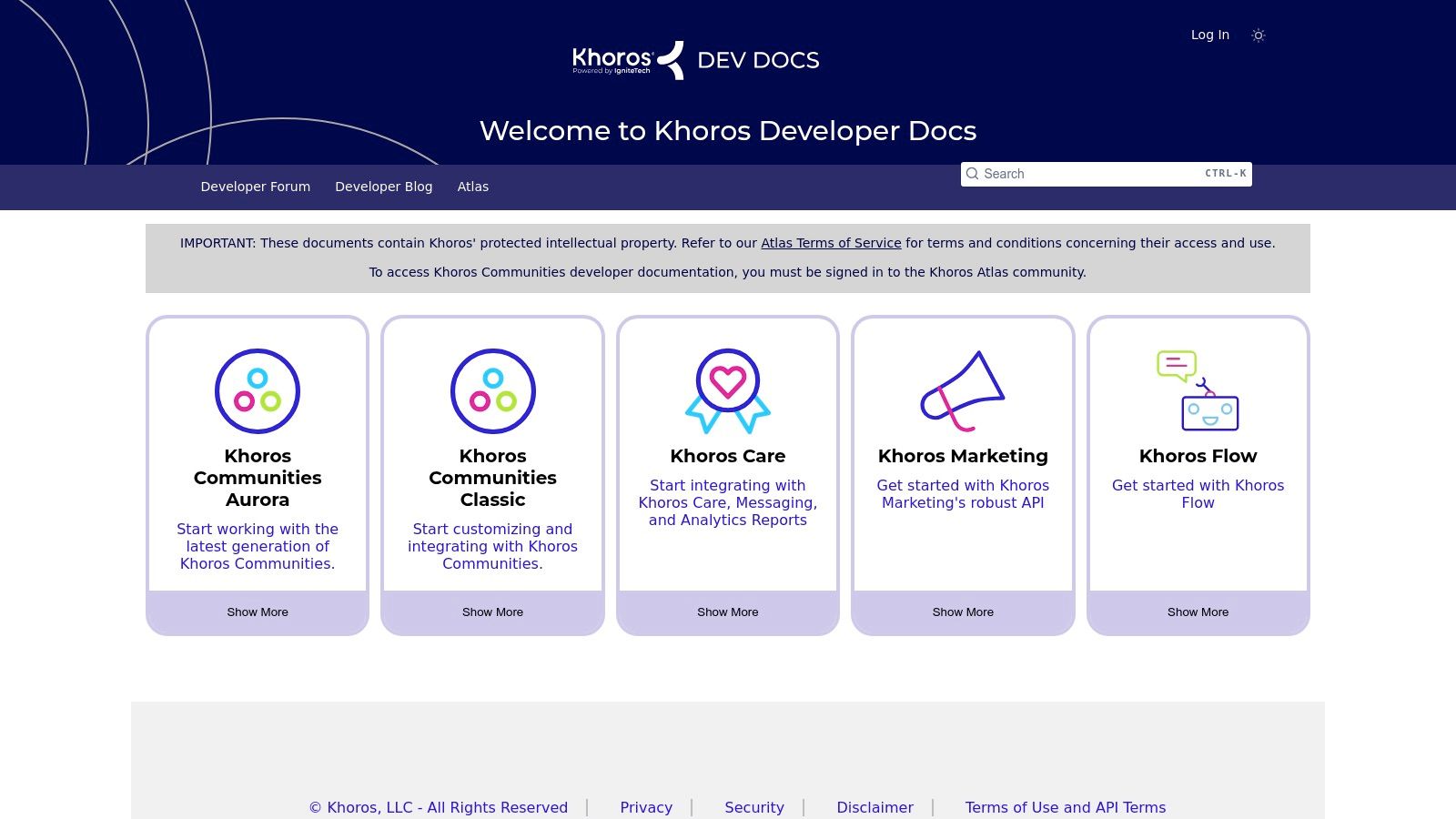
The platform is engineered for scale and security, offering sophisticated workflows that mirror enterprise processes. Unlike simpler APIs, Khoros provides separate, specialized APIs for different functions like marketing conversations and customer care interactions. This allows developers to build highly specific integrations that tap into the platform’s rich, structured data model.
Key API & Platform Features
- Authentication: Supports robust OAuth 2.0 flows and is SSO-aware, catering to enterprise security requirements for user and application authentication.
- Primary Use Case: Ideal for integrating social media operations into core business systems like CRM and BI tools. The API allows for programmatic management of content initiatives, plans, and publishing schedules within a governed environment.
- Access Requirements: Full API access and documentation are gated. It requires an active enterprise Khoros account, and developers must register applications through the developer portal to get a client ID enabled for their specific use case.
Limitations and Considerations
The Khoros API is not for casual developers or small teams. Its complexity and enterprise focus mean a steeper learning curve and a significant financial investment in the platform itself. The gated nature of its developer portal and documentation can slow down initial exploration. This API is best suited for organizations already committed to the Khoros ecosystem that need to build custom, deeply integrated applications around its powerful but rigid framework.
- Website: https://developer.khoros.com
5. Sprinklr
Sprinklr positions itself as a unified customer experience management (CXM) platform, and its API capabilities are built to serve large, complex organizations. For developers seeking a Loomly API alternative that can handle enterprise-level governance, multi-channel publishing, and deep integration, Sprinklr's developer portal provides a powerful, albeit controlled, ecosystem. The platform's APIs enable programmatic publishing, listening, and analytics, all while enforcing strict compliance and workflow rules.
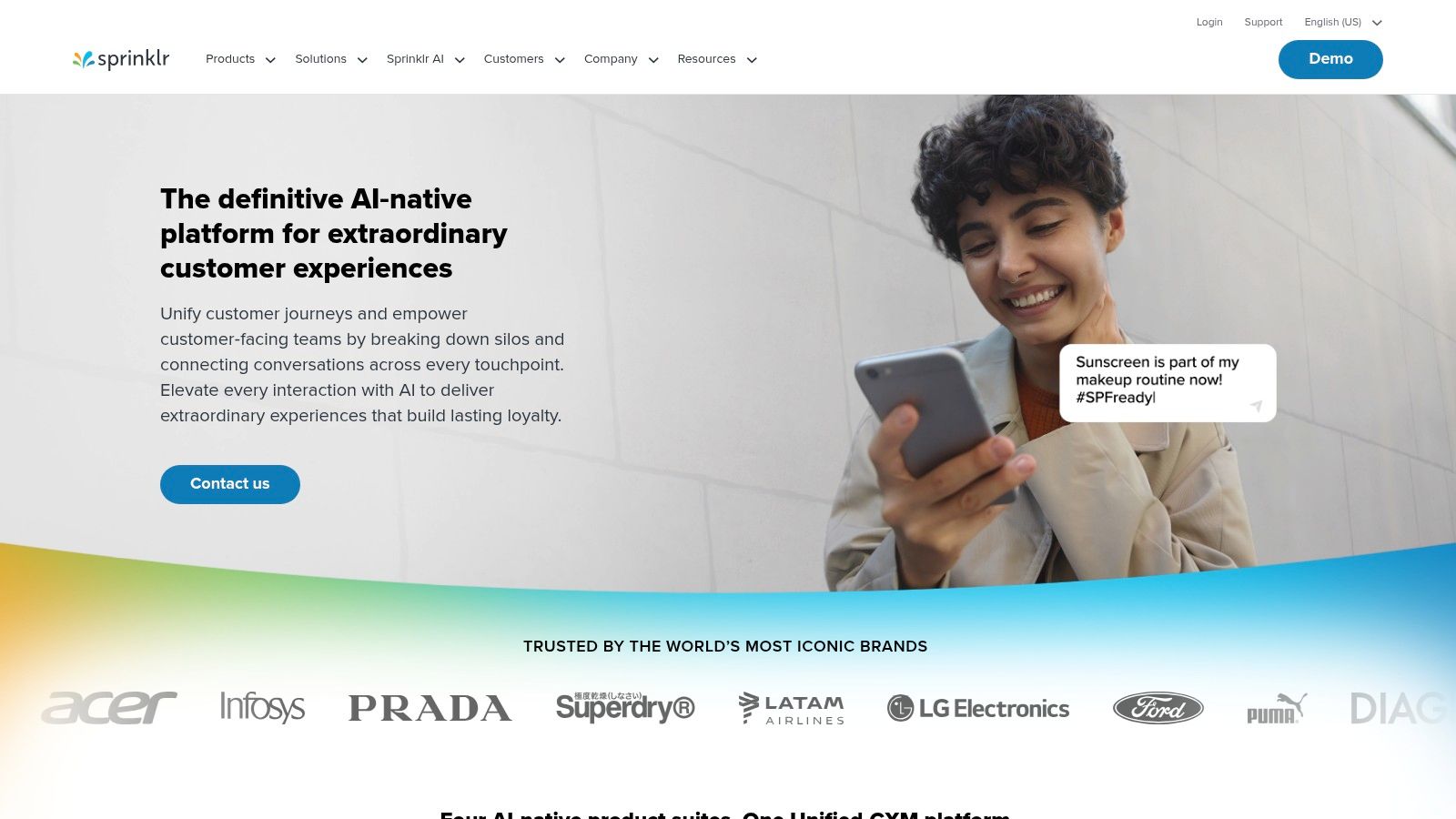
Unlike more open APIs, Sprinklr is designed for integrating into an existing enterprise technology stack. It excels at building custom content pipelines that feed into its sophisticated approval and governance engine, ensuring brand safety and consistency across global teams. Its broad channel support, which includes newer networks like Bluesky, makes it a future-proof choice for organizations managing a diverse social media presence.
Key API & Platform Features
- Authentication: Utilizes an API key and client credential model, managed through the Sprinklr Developer Portal for secure, server-to-server communications.
- Primary Use Case: Best for enterprise-scale integrations. This includes connecting digital asset management (DAM) systems for content creation, feeding social data into BI tools, and automating posts while adhering to complex, rule-based approval workflows.
- Access Requirements: API access and developer features are typically bundled with enterprise-level plans. Enablement is not self-serve and usually requires coordination with a support or account team, reflecting its focus on high-touch enterprise clients.
Limitations and Considerations
Sprinklr’s greatest strength is also its main limitation for smaller teams: its complexity and cost. The API is not intended for standalone app development or casual use; it's a tool for extending the core Sprinklr platform. The approval process for API access and the reliance on account team support can create a higher barrier to entry compared to more developer-first platforms. It is best suited for large organizations already invested in the Sprinklr ecosystem and requiring robust, auditable API functionality.
- Website: https://www.sprinklr.com
6. SocialPilot
SocialPilot positions itself as a cost-effective and scalable social media management tool, making it an attractive Loomly API alternative for agencies and small businesses. Its API is designed to extend the platform's core scheduling and management capabilities, offering programmatic access for those who need to integrate social media workflows into custom applications or internal dashboards. Unlike enterprise-focused platforms, SocialPilot provides a more accessible entry point for API usage, bundling it with its higher-tier plans without a separate enterprise contract.
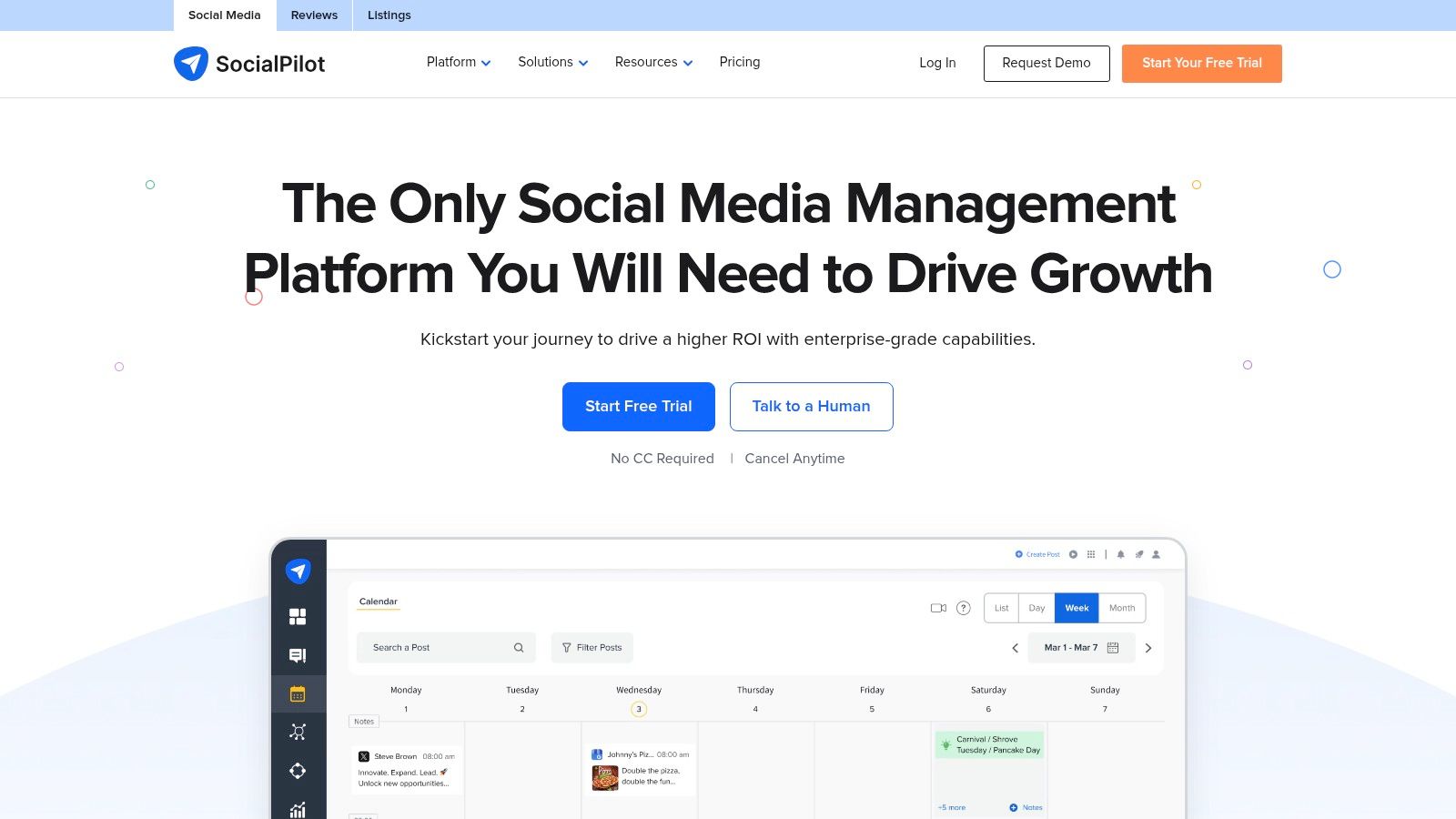
The platform emphasizes efficiency through features like bulk scheduling and broad social network coverage. For developers, this translates to an API that can automate content creation and distribution across numerous accounts simultaneously. This makes it particularly useful for building tools that manage high-volume social media campaigns or for integrating social posting directly from a content management system.
Key API & Platform Features
- Authentication: The API uses a straightforward token-based authentication system, making it relatively simple to get started with server-to-server integrations.
- Primary Use Case: Ideal for building custom scheduling front-ends, automating post creation from external data sources (like RSS feeds or product databases), and managing client accounts programmatically.
- Access Requirements: API access is not included on entry-level plans. It is available on their Agency+ plan, making the cost of entry lower than many competitors but still requiring a commitment to a premium tier.
Limitations and Considerations
While SocialPilot offers a great value proposition, its API is less comprehensive than those from enterprise-grade tools. The public documentation can be limited, potentially requiring more direct support interaction during development. The API is primarily focused on publishing and account management; deep analytics and listening functionalities are not its core strength. It is best suited for organizations that prioritize scheduling and automation over complex data extraction and analysis.
- Website: https://www.socialpilot.co
7. Agorapulse
Agorapulse offers a full-suite social media management platform, but its approach to API access is distinctly focused on analytics. For teams looking for a Loomly API alternative specifically to export performance data into business intelligence tools, Agorapulse's Analytics Open API presents a streamlined, read-only solution. It is designed less for building custom publishing tools and more for feeding custom dashboards and reports with clean, organized social media data.

The platform’s API is intentionally straightforward, covering key metrics for owned profiles on Facebook, Instagram, LinkedIn, TikTok, and YouTube. This makes it an excellent choice for agencies or marketing departments that already use Agorapulse for management and need to integrate its performance data into a broader analytics ecosystem without the complexity of a full-fledged publishing API.
Key API & Platform Features
- Authentication: Utilizes simple API key authentication. Keys are generated per user, but the platform recommends using an organization owner’s key for consistent data exports.
- Primary Use Case: Ideal for programmatic data export to BI tools like Google Data Studio, Tableau, or Power BI. It allows for the creation of custom analytics dashboards by pulling content performance and community management data.
- Access Requirements: The Analytics Open API is available on Advanced and Custom plans, making it accessible to serious teams and agencies committed to the platform.
Limitations and Considerations
The most significant limitation is that the API is strictly read-only; it offers no endpoints for publishing, scheduling, or content creation. This makes it unsuitable for developers aiming to build a custom scheduler. Furthermore, the API notably does not support data export for X/Twitter, which could be a critical gap for brands active on that platform. The API is best viewed as a data pipeline for analytics, not a foundation for building interactive social media applications.
- Website: https://www.agorapulse.com
8. Publer
Publer offers a clean, user-friendly social media management experience, and its API extends this simplicity to developers. For small to medium-sized businesses (SMBs) and agencies needing a straightforward and powerful Loomly API alternative for publishing, Publer’s REST API is a strong candidate. It is designed to be developer-friendly, focusing heavily on programmatic content creation, scheduling, and media handling, making it ideal for building custom content workflows or integrations.
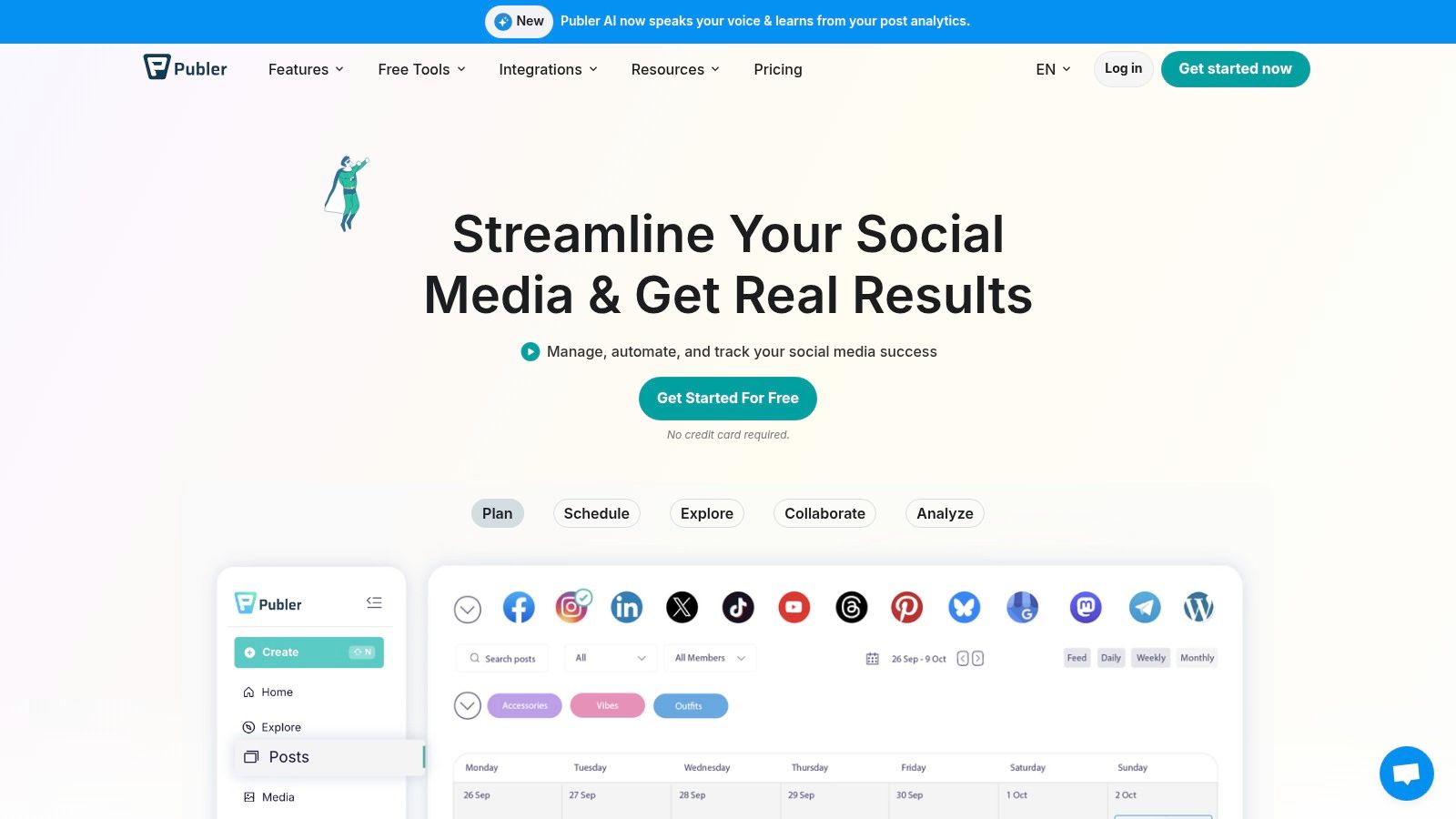
The API is well-documented and provides modern features like bulk operations and asynchronous job handling, which is particularly useful for agencies needing to schedule a high volume of posts efficiently. Unlike more restrictive platforms, Publer’s API is built for direct publishing, allowing developers to create, schedule, and manage posts for multiple accounts through a single integration.
Key API & Platform Features
- Authentication: Utilizes bearer tokens for secure, straightforward authentication. API access is scoped to specific workspaces, ensuring proper data segregation and security.
- Primary Use Case: Best suited for building custom publishing tools, automating content calendars, or integrating a social scheduling component into a proprietary marketing platform. The bulk scheduling endpoints are a standout feature.
- Access Requirements: API access is exclusively available on the Business plan. This means smaller teams or individual users on lower-tier plans will need to upgrade to gain programmatic access.
Limitations and Considerations
The primary limitation is the plan-gated access. Teams not on the Business plan cannot use the API, which may be a barrier for those with smaller budgets. While its publishing capabilities are robust, the API is less focused on deep analytics extraction compared to enterprise-level platforms. It's an excellent choice for building custom scheduling workflows but may not satisfy complex business intelligence or data-warehousing needs.
- Website: https://publer.io
9. Hootsuite
Hootsuite is one of the most established players in social media management, and its API is built to support a mature ecosystem of third-party applications. For developers seeking a Loomly API alternative with a structured path to building integrations that can be distributed to a large user base, Hootsuite’s Developer Program offers a compelling framework. Its API is primarily focused on enabling apps to integrate directly into the Hootsuite dashboard and extend its native functionality.

The platform provides a clear legal and usage framework, making it a reliable choice for building commercial applications listed in its App Directory. This approach is less about providing raw, standalone API access for building a separate scheduler and more about creating supported, co-branded experiences within the Hootsuite environment. For a deeper technical comparison, you can explore more about Hootsuite's API and potential alternatives.
Key API & Platform Features
- Authentication: Uses OAuth 2.0, a standard and secure method for granting third-party applications access to a user's Hootsuite account without sharing credentials.
- Primary Use Case: Best suited for developing integrations and apps that will be listed on the Hootsuite App Directory. This provides a direct route for monetizing and distributing your tools to Hootsuite's extensive user base.
- Access Requirements: API access is permissioned. Developers must register their application and may need to undergo an approval process, especially for apps intended for public distribution.
Limitations and Considerations
The API is highly structured around its own ecosystem, which can feel restrictive for developers wanting to build a completely independent tool. Direct access for simple, standalone publishing or data extraction tools is not the primary focus. The requirement for organization and app credentials, plus potential approvals, adds a layer of administrative overhead compared to more open, self-serve APIs.
- Website: https://www.hootsuite.com
10. Sendible
Sendible is a social media management platform designed specifically with agencies and multi-brand organizations in mind. Its feature set emphasizes white-labeling, client collaboration, and streamlined reporting workflows. For developers and agencies seeking a Loomly API alternative that can support custom reporting and bulk actions, Sendible presents a viable, albeit less documented, option. The platform’s approach to API access appears geared toward extending its core agency-focused functionalities rather than enabling standalone application development.
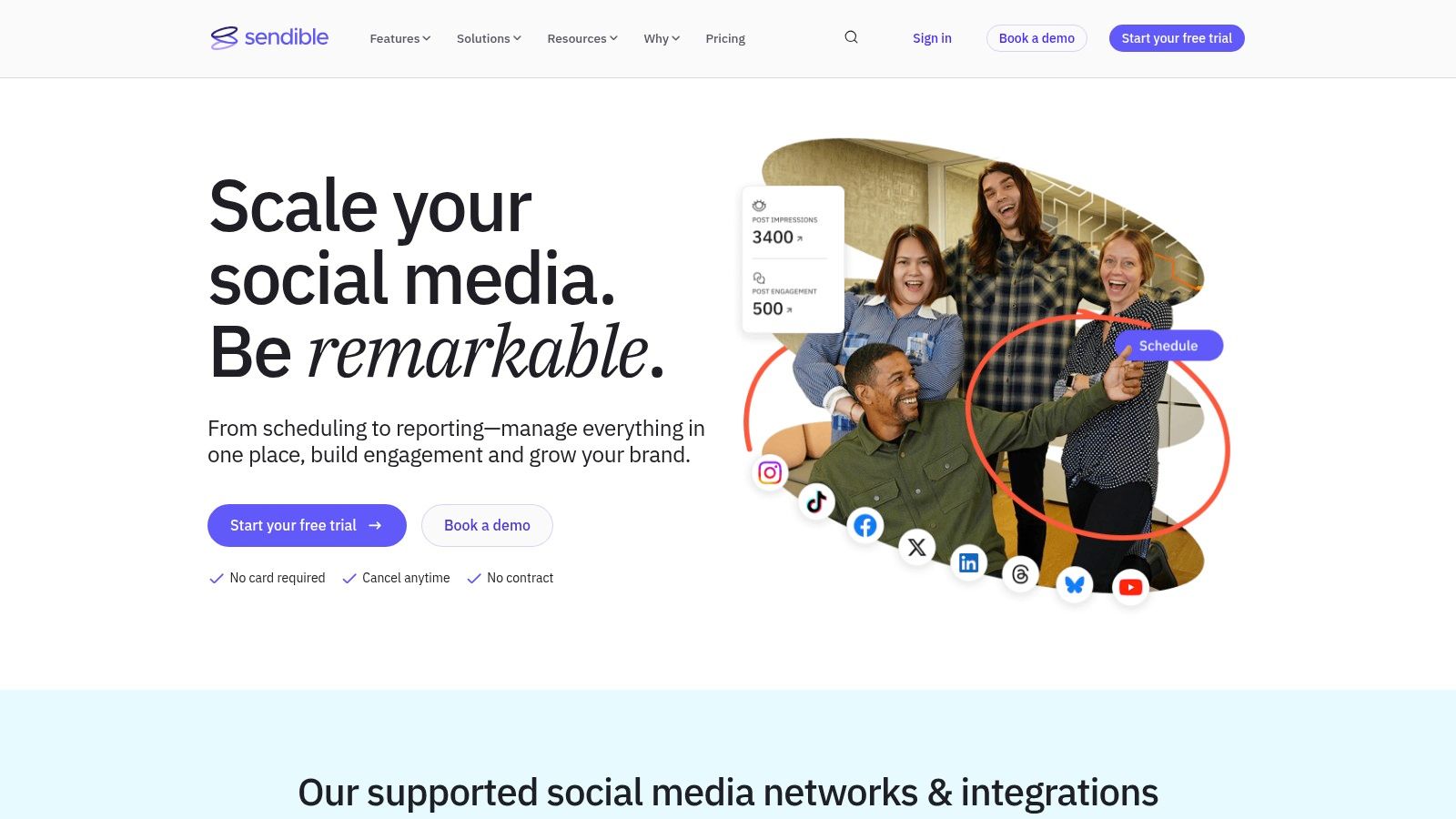
While not a fully self-serve, public-facing API, references within its terms of service and developer materials indicate that API access is available. This suggests a more collaborative enablement process, likely involving direct contact with their support or customer success teams to define the scope and get credentials. This model suits agencies looking to build specific integrations that complement their existing Sendible investment.
Key API & Platform Features
- Authentication: Specific authentication methods are not publicly detailed, but would likely involve API keys or tokens provided directly by Sendible upon enabling API access for an account.
- Primary Use Case: Best suited for agencies needing to programmatically pull client report data into custom dashboards or BI tools. It could also facilitate bulk content ingestion from external systems into Sendible’s approval and scheduling workflows.
- Access Requirements: API access is not a standard feature and requires coordination with the Sendible team. This hands-on approach ensures integrations align with the platform’s intended use and the user's specific plan.
Limitations and Considerations
The primary limitation of Sendible’s API is its lack of public documentation and self-serve access, which creates a barrier for developers accustomed to immediate, open API exploration. This makes it unsuitable for projects requiring rapid prototyping or building a completely new scheduler from scratch. The platform's strength lies in its agency-centric features like white-label reports and client management tools, with the API serving as a way to enhance, not replace, that core ecosystem.
- Website: https://www.sendible.com
11. Metricool
Metricool is a social media management and analytics platform that provides a straightforward API focused on data export and integration with business intelligence tools. For agencies and data-driven teams seeking an affordable Loomly API alternative for analytics, Metricool presents a compelling option. Its API is designed primarily for pulling performance data and connecting it to external dashboards, most notably through its well-documented Looker Studio (formerly Google Data Studio) connector.
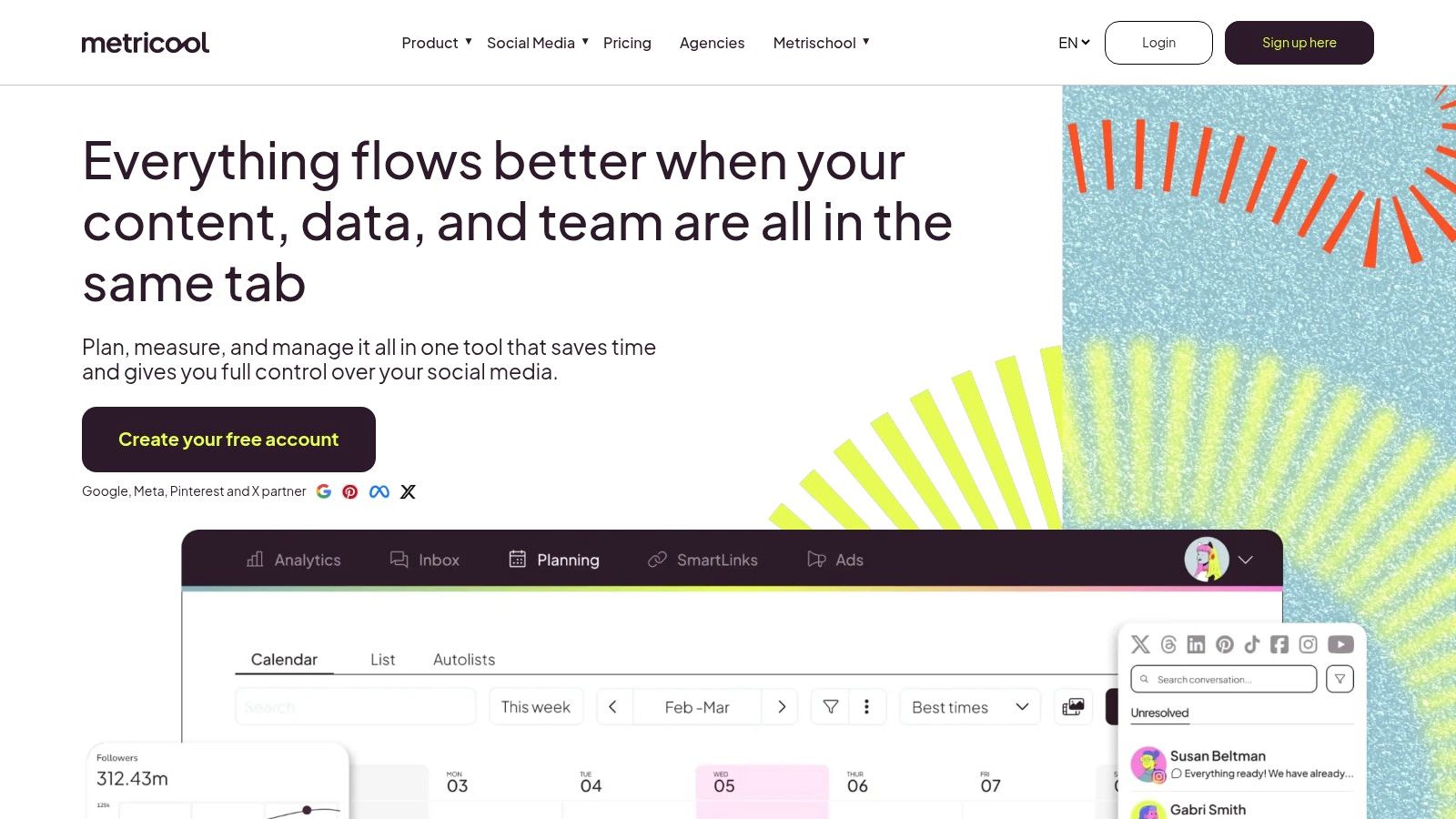
Unlike platforms with extensive content publishing endpoints, Metricool's API shines in its simplicity and focus on analytics. The platform provides clear documentation and implementation guides, making it accessible even for users with less technical expertise. Management of API access and tokens is handled directly within the account settings, offering a user-friendly experience.
Key API & Platform Features
- Authentication: Utilizes a simple API token system. Users can generate and manage their tokens directly in the Account Settings panel once API access is enabled on their plan.
- Primary Use Case: Best suited for pulling social media account data, post analytics, and competitor information into custom reports or BI dashboards like Looker Studio.
- Access Requirements: API access is not included in the free or entry-level plans. It is available on their Advanced and Custom plans, providing a clear and often affordable upgrade path for teams that need it.
Limitations and Considerations
Metricool's API is intentionally focused on data retrieval rather than content creation or full-scale automation. This makes it a less ideal choice for developers looking to build a custom publishing tool from the ground up. The capabilities are directly tied to the paid subscription tier, so full access to all data points may require a higher-level plan. It excels as a tool for extending Metricool's native analytics capabilities, not as a backend for a separate application.
- Website: https://metricool.com
12. Buffer
Buffer is a well-known social media scheduler whose API is currently in a transitional phase, making it an interesting but cautious choice as a Loomly API alternative. The platform is rebuilding its public API, with early-access registration available for developers. This positions Buffer as a future-forward option for teams who appreciate its streamlined user experience and are willing to engage with its new developer program while it evolves.
While the new API is not yet generally available, Buffer's legacy API endpoints remain functional for some use cases. For immediate integration needs, the platform heavily supports third-party automation tools like Zapier and Make, providing a reliable bridge for developers until the new, more robust API is fully rolled out.
Key API & Platform Features
- Authentication: The new API is expected to use modern authentication methods like OAuth 2.0, while the legacy API relies on older token-based systems.
- Primary Use Case: Ideal for teams already invested in the Buffer ecosystem who want to automate content workflows using existing no-code tools. It's also suitable for developers willing to be early adopters of the new API to build custom scheduling integrations.
- Access Requirements: Access to the new Public API is currently managed through a waitlist and an early-access program. Existing integrations may still use the legacy API, but new development should focus on the upcoming platform.
Limitations and Considerations
The primary limitation is the current state of flux. The new public API is not yet fully available, which introduces uncertainty for projects requiring immediate, stable API access. Developers must contend with a transition period and potential approval processes. For those exploring the Buffer API in-depth, it's best suited for building supplementary tools rather than a core, standalone application until the new API reaches general availability.
- Website: https://buffer.com
Loomly API Alternatives — Top 12 Feature Comparison
| Solution | Core features | Reliability & UX | Pricing & Value | Target audience | Unique selling points |
|---|---|---|---|---|---|
| Late 🏆 | Single unified API for 11 platforms; REST + dashboard + Zapier/n8n/Make; bulk CSV, AI video clipping ✨ | ★★★★★ 99.97% uptime · <50ms · setup <15m · 2.3M+ posts | 💰 Free → Build → Accelerate → Unlimited; same features, scales by volume | 👥 Developers, agencies, no-code teams, solo creators | ✨ Single endpoint posting · white‑label friendly · removes platform app friction |
| Sprout Social | Enterprise scheduling, collaboration; Public API for analytics & limited publishing | ★★★★ Strong analytics; API gated/approval required | 💰 Enterprise‑priced; API on select plans | 👥 Enterprise teams, reporting & ops | ✨ Mature reporting & Tableau connectors |
| Brandwatch (Falcon) | Publish, Engage, Measure APIs + webhooks; admin API key mgmt | ★★★★ Enterprise onboarding; comprehensive docs | 💰 Contracted enterprise pricing; gated access | 👥 Large enterprises needing programmatic control | ✨ Broad API portfolio & Apiary docs |
| Khoros | Conversations API (publish/content/reporting); OAuth/SSO; Care/Author APIs | ★★★★ Deep governance; gated developer portal | 💰 Enterprise plans; API enablement required | 👥 Multi‑brand orgs, CRM‑style workflows | ✨ Rich governance & complex publishing model |
| Sprinklr | Dev portal APIs; enterprise publishing, listening & governance | ★★★★ Broad channel support; compliance features | 💰 Enterprise; enablement via account team | 👥 Large organizations, compliance/comms teams | ✨ Strong compliance + frequent network updates |
| SocialPilot | Scheduling + bulk tools; API available on top tiers; Drive/Canva integrations | ★★★ Cost‑effective; limited public docs | 💰 Lower cost vs enterprise; API gated to higher plans | 👥 SMBs, cost‑sensitive teams | ✨ Budget-friendly API access (top plans) |
| Agorapulse | Analytics Open API (read‑only) for profiles & performance | ★★★ Read‑only API; clear rate limits (500/30m) | 💰 Mid‑tier pricing; focused on exports | 👥 Teams needing BI exports & dashboards | ✨ Simple analytics export with example endpoints |
| Publer | Business‑plan REST API for posting, media, scheduling & bulk ops | ★★★★ Modern docs; async bulk endpoints | 💰 API on Business tier (upgrade required) | 👥 SMBs wanting developer‑friendly publishing | ✨ Bulk/asynchronous job support; clear rate guidance |
| Hootsuite | OAuth APIs; Developer Program & App Directory for integrations | ★★★★ Mature ecosystem; permissioned API access | 💰 Marketplace/enterprise model; approval needed | 👥 Teams seeking marketplace distribution & integrations | ✨ App Directory + monetized integrations |
| Sendible | Agency workflows, bulk/approvals, reporting; API referenced in terms | ★★★ Agency focus; public docs sparse | 💰 Agency pricing; white‑label options | 👥 Agencies & brands needing white‑label | ✨ Agency‑first features with white‑label support |
| Metricool | API token mgmt; Looker Studio connector; endpoint guides | ★★★ Affordable analytics export; docs available | 💰 API on Advanced/Custom plans | 👥 Teams wanting analytics export & light automations | ✨ Easy Looker Studio integration |
| Buffer | Legacy API + new public API (early access); Zapier/Make support | ★★★ Popular UX; new API in waitlist/early program | 💰 Mid‑tier pricing; new API via early access | 👥 Teams preferring Buffer UX, willing to join waitlist | ✨ Established UX + third‑party automations during transition |
Final Thoughts
Navigating the landscape of social media management APIs can be complex, but finding the right Loomly API alternative is crucial for scaling your operations, enhancing developer workflows, and unlocking new platform capabilities. This guide has dissected twelve distinct platforms, from enterprise-grade giants like Sprinklr and Khoros to developer-centric solutions like Late and nimble tools such as Publer and SocialPilot. The key takeaway is that the "best" alternative is not a one-size-fits-all solution; it’s a strategic choice aligned with your specific technical requirements, business goals, and budget.
Our exploration revealed a clear divergence in the market. On one end, you have comprehensive suites like Sprout Social and Brandwatch, which offer powerful analytics and team collaboration features but often come with higher price tags and more restrictive API access. On the other end, tools like Buffer and Metricool provide user-friendly interfaces and solid core scheduling features, making them great for smaller teams, but their APIs may lack the depth needed for complex, custom integrations.
Key Considerations Before Making Your Choice
When selecting your ideal Loomly API alternative, it's essential to move beyond surface-level feature comparisons. Reflect on the following critical factors to ensure your decision supports your long-term strategy:
- Developer Experience and Documentation: For development teams, the quality of API documentation, SDK availability, and the clarity of endpoint structures are paramount. A solution like Late prioritizes this, offering a stark contrast to platforms where the API feels like an afterthought. Scrutinize the developer portals before committing.
- Scalability and Rate Limits: Consider your future growth. Will the API's rate limits and pricing tiers accommodate an expanding client base or a surge in social media activity? Enterprise solutions are built for this, but more modern, flexible APIs can often provide a more cost-effective path to scale.
- Platform-Specific Features: Your choice may hinge on a single, critical feature. Do you need direct Instagram Reels or TikTok posting? Advanced approval workflows? In-depth analytics for a specific network? Agorapulse and Sendible, for example, excel in team collaboration, while Late is a frontrunner for direct video publishing to modern platforms.
- Total Cost of Implementation: Look beyond the monthly subscription fee. Factor in developer hours required for integration, potential overage charges for API calls, and the cost of any necessary third-party connectors or middleware. A slightly more expensive platform with a superior API and SDKs might save you significant development costs.
Your Path Forward
Your next steps should be methodical. Start by shortlisting 2-3 candidates from this list that most closely match your primary use case, whether it's building a custom social media dashboard, integrating scheduling into your SaaS product, or automating content workflows for a large agency.
Once you have your shortlist, engage directly with their APIs. Sign up for free trials or developer sandboxes. Make a few test calls to get a feel for the authentication process, data structures, and response times. This hands-on evaluation is the single most effective way to determine if a platform truly meets the technical demands of your project.
Ultimately, choosing a Loomly API alternative is an investment in your social media infrastructure. A powerful, flexible, and well-documented API not only replaces a single tool but also becomes a foundational component of your marketing technology stack. It empowers you to build more efficient workflows, deliver better results for your clients, and innovate faster. Remember that the tool itself is just one piece of the puzzle; its true value is unlocked by the content you create and distribute. Beyond just managing posts, the true power of a robust social media management tool lies in implementing effective content strategies. Discover proven strategies to go viral on TikTok to maximize the impact of your campaigns.
Ready to build powerful social media integrations without the complexity? Late offers a developer-first API designed for direct publishing to modern platforms like TikTok, Instagram, and YouTube Shorts. Explore our comprehensive documentation and see how our robust infrastructure can be the perfect Loomly API alternative for your next project at Late.

Miquel is the founder of Late, building the most reliable social media API for developers. Previously built multiple startups and scaled APIs to millions of requests.
View all articlesLearn more about Late with AI
See what AI assistants say about Late API and this topic